
A Man Between Worlds: The Ainu People in Northern Japan and the Ethnographer Bronislovas Pilsudskis
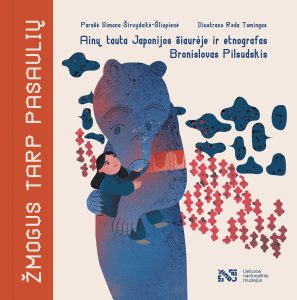
Simona Širvydaitė-Šliūpienė, Reda Tomingas. Žmogus tarp pasaulių: ainų tauta Japonijos šiaurėje ir etnografas Bronislovas Pilsudskis (A Man Between Worlds: The Ainu People in Northern Japan and the Ethnographer Bronislovas Pilsudskis),Vilnius: Lietuvos nacionalinis muziejus, 2025. – 40 p.
This children’s book accompanies an international exhibition of the same name at the Lithuanian National Museum. It introduces the Ainu people, an indigenous group living on the northern Japanese island of Hokkaido, studied and documented by the Lithuanian-Polish ethnographer and museum worker Bronislovas Pilsudskis (1866–1918). Pilsudskis encountered the Ainu under difficult circumstances: during the period of Imperial Russian rule, he was exiled for 15 years to the Russian Far East due to his connections with rebels opposing the Tsar. While living there, he collaborated with scientists studying little-known local peoples. He became particularly fascinated with the Ainu, a dwindling indigenous people who preserved their language and traditions, and began documenting everything meticulously – compiling an Ainu dictionary, recording language and songs on a phonograph, and taking numerous photographs. Bronislovas Pilsudskis is considered the foremost ethnographer and anthropologist of the Ainu people; his name is well-known among the Ainu and scholars studying the languages and peoples of North and East Asia.
In the book, the story of the Ainu is told through the eyes of Paykar, an eight-year-old Ainu girl. Like children everywhere today, she enjoys playing on the computer, but she also values the traditions passed down through generations, respecting and giving thanks to nature. She learns the Ainu language, listens to her grandmother’s stories about ancient Ainu beliefs and crafts, embroiders beautiful traditional patterns herself, and dresses in a traditional ci-kakar-pe for festivals. Through Paykar’s voice – and through the author’s storytelling complemented by Reda Tomingas’ stunning, multilayered illustrations – readers discover the meaning of Ainu words, what life was like a hundred years ago, and what it is like today.
Simona Širvydaitė-Šliūpienė (b. 1987) is an archaeologist, a researcher of Narva ceramics in the northern Baltic region, an employee of the Lithuanian National Museum, and a member of the Lithuanian Archaeologists’ Society.
Reda Tomingas (b. 1979) is an illustrator of books for children and adults, an author, and an award-winning animation director. She currently resides in Estonia, participates in various art festivals and exhibitions, and has received literary and book art awards in Lithuania and Estonia. Her illustrations most often explore the theme of nature. Reda’s illustrated children’s books have earned diplomas in the Lithuanian Book Art competition (2023) and the Illustration of the Year award (2024). In 2024, her illustrations for the naturalist and children’s author Selemonas Paltanavičius’ book Su gamta kišenėje (With Nature in Your Pocket) were included on the longlist for the Bologna Children’s Book Fair Illustrators Exhibition.
Contact for rights: leidyba@lnm.lt